
Volcanoes are one of nature’s most formidable and fascinating phenomena. Their eruptions have shaped landscapes, influenced climates, and even impacted human history. Among the thousands of volcanoes scattered around the globe, a select few stand out due to their relentless activity.
The following ranking lists the ten most active volcanoes in the world by frequency of major eruption events.
Ranking Criteria & Methodology:
The ranking of the world’s most active volcanoes is based on the average frequency of recorded discrete eruption events for each volcano over the last hundred years. Minor outflows or lava lakes and similar minor events are not counted in the frequency figures.
The 10 Most Active Volcanoes in the World
1. Mount Yasur

Eruption frequency: Every ~ 15 minutes on average
Near continuous eruptions for the last ~ 800 years
Location: Tanna Island, Vanuatu
Age of Volcano: ~ 2,000 years old (probably older)
Type of Volcano: Stratovolcano
Mount Yasur is the most active volcano in the world by discrete eruption frequency, erupting roughly every 15 minutes on average. The volcano is situated on Tanna Island in the South Pacific island country of Vanuatu and is named after ‘iasur’, the Kwamera word for volcano. Yasur is also known as one of the world’s most accessible active volcanoes, making it a popular tourist destination.
The volcano has been near-continuously active for the last 800 years. However, Yasur’s frequent eruptions have been relatively small in recent times. The extremely frequent eruptions, its relative accessibility, and small, relatively “safe” eruptions are further contributing to the stratovolcano’s worldwide popularity, while also making it a cultural icon of Vanuatu.
2. Volcan de Fuego
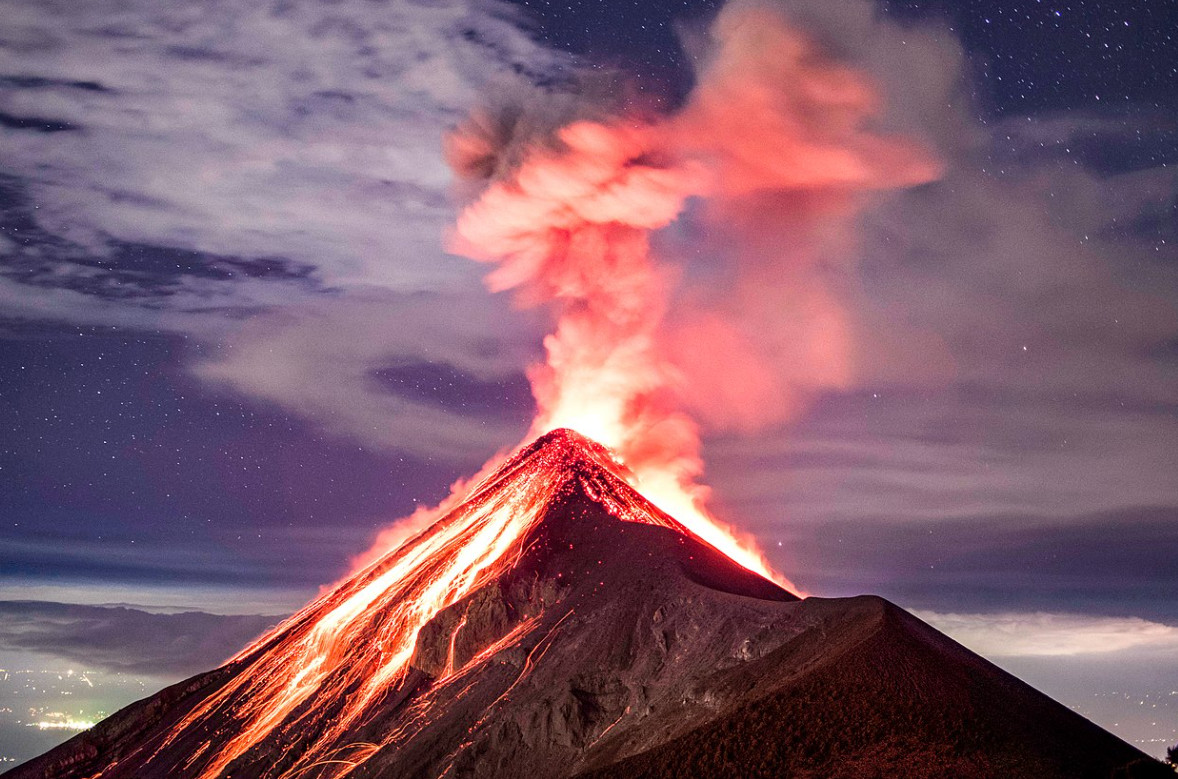
Eruption frequency: Every ~ 15 minutes on average
Near continuous eruptions for the last ~ 20 years
Location: Chimaltenango, Guatemala
Age of Volcano: ~ 200,000 years old
Type of Volcano: Stratovolcano
Volcan de Fuego, Spanish for “Volcano of Fire”, is the second most active volcano in the world right now. The volcano erupts around every 20 minutes with smaller explosions, while larger eruptions also happen regularly on an almost yearly basis. It has been near-continuously erupting since around the start of the 21st Century.
Located in the Chimaltenango Department of Guatemala, bordering the Escuintla and Sacatepequez Departments, the stratovolcano is also the most active volcano in Central America and one of the most active volcanoes lying outside an island.
3. Mount Stromboli
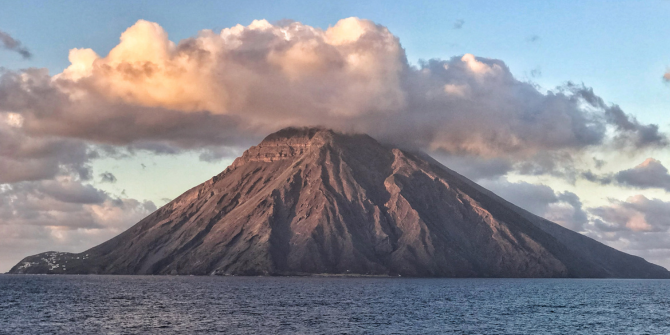
Eruption frequency: Every ~ 30 minutes on average
Near continuous eruptions for the last ~ 1,400 years
Location: Stromboli, Aeolian Islands, Italy
Age of Volcano: ~ 100,000 years old
Type of Volcano: Stratovolcano
Mount Stromboli, often called the “Lighthouse of the Mediterranean”, comes third among the most active volcanoes in the world, erupting on a less-than-hourly basis. It is world famous not only for its persistent explosive activity but also for its location on Italy’s island of Stromboli, part of the Aeolian Islands off the coast of Sicily. The volcano covers nearly the entire area of the island.
Stromboli has been erupting almost continuously for over 1,400 years, making it one of the longest-active volcanoes on Earth. Its characteristic “Strombolian eruptions”, which involve regular bursts of lava affecting only the volcano’s summit, have made the stratovolcano a subject of such extensive study that other volcanoes around the globe, which show similar erupting behaviors, are termed “Strombolian”.
4. Mount Erebus
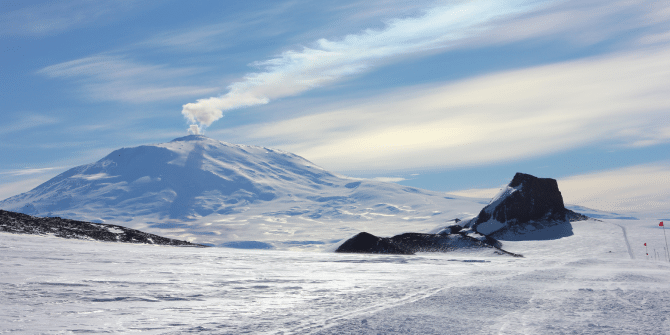
Eruption frequency: Every ~ 5 hours on average
Near continuous eruptions for the last ~ 50 years
Location: Ross Island, Antarctica
Age of Volcano: ~ 1.3 million years old
Type of Volcano: Stratovolcano
Mount Erebus follows as the world’s fourth most active volcano, erupting every few hours on an average day. Erebus is also the southernmost active volcano on Earth, being located on Ross Island in Antarctica, the world’s largest desert area. Known for its persistent lava lake, Erebus has continuously erupted over the last century.
Its very remote location and extreme surrounding environment make it a unique subject of study for volcanologists and a vital indicator of volcanic activity in one of the most isolated and coldest regions on the planet. The volcano has been around for around 1.3 million years, which also makes it one of the oldest active volcanoes in the world.
5. Mount Sakurajima

Eruption frequency: Every ~ second day on average
Near continuous eruptions for the last ~ 70 years
Location: Kagoshima, Japan
Age of Volcano: ~ 13,000 years old
Type of Volcano: Stratovolcano
Mount Sakurajima follows as the fifth most active volcano on Earth, erupting roughly every second day on average. It is located on the southern Japanese island of Kyushu. Sakurajima (Japanese for “Cherry Blossom Island”) was originally an island, but a massive eruption in 1914 has since connected it with the mainland, and Sakurajima now forms a peninsula on which the volcano is located.
Being only around 13,000 years old, Sakurajima is the youngest among the world’s most active volcanoes. Frequent Strombolian eruptions and degassing have characterized the stratovolcano’s continuous activity since 1955. The volcano poses a significant hazard to the city of Kagoshima, to which the volcano belongs. The city’s downtown area is located just across Sakurajima.
6. Mount Etna
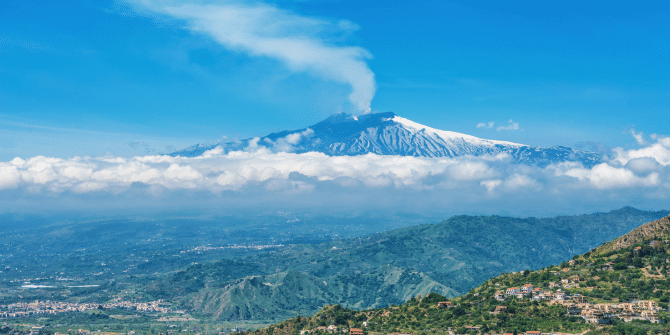
Eruption frequency: Every ~ 4 months on average
Near continuous eruptions for the last ~ 3,500 years
Location: Sicily, Italy
Age of Volcano: ~ 500,000 years old
Type of Volcano: Stratovolcano
Mount Etna follows as the world’s sixth-most active volcano, erupting multiple times a year on average. The volcano is towering over the Italian island of Sicily with a height of over 3,300 meters / 11,000 feet, making it Europe’s highest active volcano, while also being the continent’s oldest active volcano.
Its regular activity dates back thousands of years, with the last century witnessing particularly frequent eruptions. Etna is a stratovolcano that frequently erupts violently, sending lava fountains and ash plumes into the sky. Continuous monitoring helps mitigate risks to the nearby populous areas, which include Catania, Sicily’s second-largest city.
7. Piton de la Fournaise

Eruption frequency: Every ~ 6 months on average
Near continuous eruptions for the last ~ 500 years
Location: Reunion Island, France
Age of Volcano: ~ 530,000 years old
Type of Volcano: Shield volcano
Piton de la Fournaise (French for “Peak of the Furnace”) comes seventh among the world’s most active volcanoes. It is also the most active shield volcano on our planet, erupting roughly twice a year on average. Piton de la Fournaise is situated on the southeastern side of Reunion Island in the Indian Ocean. The island is an overseas territory of France.
The volcano is known for its effusive eruptions, which produce large volumes of basaltic lava. The relatively high accessibility of the volcano, thanks to the ‘Pas de Bellecombe-Jacob’ mountain pass, makes the volcano popular for volcanologists and tourists alike.
8. Kilauea

Eruption frequency: Every ~ 2 years on average
Near continuous eruptions for the last ~ 60 years
Location: Hawaii, USA
Age of Volcano: ~ 280,000 years old
Type of Volcano: Shield volcano
Kilauea is the eighth most active volcano in the world. Kilauea has had discrete eruption events every second year on average over the last hundred years, though it is better known for its long eruption periods. Its continuous eruption from 1983 until 2018 was the longest-lasting eruption of any volcano in modern times and has made it an absolute spectacle of volcanic activity.
The volcano is located on the Pacific Ocean’s Hawaii Island, the largest of the Hawaiian Islands, which all belong to the USA. Kilauea is the native Hawaiian word for “spewing”, a fitting name as Kilauea is a shield volcano and its eruptions are predominantly non-explosive, producing continuing lava flows that also still continue to impact the island’s landscape.
9. Mount Merapi

Eruption frequency: Every ~ 3 years on average
Near continuous eruptions for the last ~ 500 years
Location: Central Java, Indonesia
Age of Volcano: ~ 400,000 years old
Type of Volcano: Stratovolcano
Mount Merapi is the ninth most active volcano in the world. It is located in the province of Central Java, Indonesia, part of Java Island. Merapi is not only one of the most active volcanoes, with discrete eruptions every three years on average, but it is also one of the most dangerous volcanoes in the world.
Merapi is part of the so-called ‘Pacific Ring of Fire’, a belt of volcanoes covering the Pacific Ocean that includes close to a thousand volcanoes, representing around 2/3s of the world’s total number of volcanoes. The stratovolcano’s increased activity over the last century poses a significant threat to the densely populated regions surrounding it due to the volcano’s very explosive eruptions and pyroclastic flows.
10. Mount Villarrica

Eruption frequency: Every ~ 4 years on average
Near continuous eruptions for the last ~ 500 years
Location: Araucania/Los Rios, Chile
Age of Volcano: ~ 600,000 years old
Type of Volcano: Stratovolcano
Mount Villarrica completes the list of the world’s ten most active volcanoes, erupting roughly every four years on average during the last hundred years. Mount Villarrica is located in Southern Chile on the border of the Araucania and Los Rios regions, near the city of Villarrica, which the volcano is named after.
The stratovolcano is adjacent to the Andes, one of the highest mountain ranges in the world. Mount Villarrica is known for its picturesque snow-capped summit and lava lake, making it popular for both volcanists and tourists. Its activity is closely monitored due to its potential to impact local communities and the environment.
Top 10 Most Active Volcanoes in the World: Overview
Click to expand/collapse
Location: | Type of Volcano: | Eruption fequency: | |
|---|---|---|---|
1. Mount Yasur | Tanna Island, Vanuatu | Stratovolcano | Every ~ 15 minutes on average |
2. Volcan de Fuego | Chimaltenango, Guatemala | Stratovolcano | Every ~ 20 minutes on average |
3. Mount Stromboli | Aeolian Islands, Italy | Stratovolcano | Every ~ 30 minutes on average |
4. Mount Erebus | Ross Island, Antarctica | Stratovolcano | Every ~ 5 hours on average |
5. Mount Sakurajima | Kagoshima, Japan | Stratovolcano | Every ~ 2 days on average |
6. Mount Etna | Eruption frequency: | Stratovolcano | Every ~ 4 months on average |
7. Piton de la Fournaise | Reunion Island, France | Shield Volcano | Every ~ 6 months on average |
8. Kilauea | Hawaii, USA | Shield Volcano | Every ~ 2 years on average |
9. Mount Merapi | Central Java, Indonesia | Stratovolcano | Every ~ 3 years on average |
10. Mount Villarrica | Araucania/Los Rios, Chile | Stratovolcano | Every ~ 4 years on average |
The most active volcanoes in the world by estimated average eruption frequency, based on discrete eruption events over the last hundred years, excluding minor lava lake overflows.
Top 10 Most Active Volcanoes in the World: FAQs
Click to expand/collapse
How is a volcano’s “activity” ranked?
The ranking of the world’s most active volcanoes is based on a specific and consistent methodology: the average frequency of recorded discrete major eruption events for each volcano over the last one hundred years. It is important to note that this calculation explicitly excludes lesser volcanic activities. Minor outflaws, persistent lava lakes, and other similar minor events are not counted in the frequency figures used for this list.
What makes Mount Yasur the most active volcano in the world?
Yasur holds the top rank due to its remarkable eruption frequency, with a discrete eruption occurring at an average frequency of ~15 minutes. This stratovolcano, located on Tanna Island in Vanuatu, has a history of near-continuous activity stretching back ~800 years. Paradoxically, it is this constant but relatively small-scale and predictable activity that makes it one of the world’s most accessible and popular “tourist volcanoes,” as well as a cultural icon for the nation of Vanuatu.
What types of volcanoes are among the most active volcanoes in the world?
The ten volcanoes on this list fall into two distinct categories: Stratovolcano and Shield volcano.
◦ Stratovolcanoes:
▪ Mount Yasur
▪ Volcan de Fuego
▪ Mount Stromboli
▪ Mount Erebus
▪ Mount Sakurajima
▪ Mount Etna
▪ Mount Merapi
▪ Mount Villarrica
◦ Shield Volcanoes:
▪ Piton de la Fournaise
▪ Kilauea
Which volcanoes on the list hold unique records or distinctions?
Several volcanoes on the list are distinguished by unique geographical or historical records.
◦ Longest Period of Continuous Eruption: Mount Etna has been in near-continuous eruption for the last ~3,500 years, the longest period of any volcano on this list.
◦ Southernmost Active: Mount Erebus, located in Antarctica, is the southernmost active volcano on the planet.
◦ Oldest Active: At approximately 1.3 million years old, Mount Erebus is the oldest volcano on this list and one of the oldest active volcanoes in the world.
◦ Youngest: Mount Sakurajima is the youngest volcano among this active group, at only ~13,000 years old.
◦ Europe’s Highest Active: Towering over Sicily, Mount Etna is the highest active volcano in Europe.
◦ Most Active Shield Volcano: Piton de la Fournaise holds the title of the most active shield volcano on our planet.
How do these active volcanoes impact human populations?
The volcanoes on this list have a dual impact on nearby human populations, posing both significant hazards and offering unique opportunities for tourism and study.
◦ Risks and Hazards: Several of these volcanoes represent a direct threat to densely populated areas. Mount Merapi in Indonesia is considered one of the most dangerous due to its explosive eruptions and dangerous pyroclastic flows—fast-moving currents of hot gas and volcanic matter. Similarly, Mount Sakurajima in Japan poses a significant hazard to the nearby city of Kagoshima, whose downtown area is located just across from the volcano. Mount Etna‘s violent eruptions are a potential risk to Catania, Sicily’s second-largest city.
◦ Tourism and Accessibility: In contrast, the predictable and less-explosive nature of other volcanoes has turned them into major tourist destinations. Mount Yasur is popular for its accessibility and relatively “safe” eruptions. Piton de la Fournaise on Reunion Island and the picturesque, snow-capped Mount Villarrica in Chile are also popular with both tourists and volcanologists, who can study them up close.
Which volcanoes are known for their extremely long periods of continuous eruption?
Several volcanoes on the list are particularly notable for their multi-century, or even multi-millennia, periods of near-continuous activity.
◦ Mount Etna: Near-continuous eruptions for the last ~3,500 years.
◦ Mount Stromboli: Near-continuous eruptions for the last ~1,400 years.
◦ Mount Yasur: Near-continuous eruptions for the last ~800 years.
◦ Piton de la Fournaise: Near-continuous eruptions for the last ~500 years.
◦ Mount Merapi: Near-continuous eruptions for the last ~500 years.
◦ Mount Villarrica: Near-continuous eruptions for the last ~500 years.
What is a “Strombolian eruption”?
A “Strombolian eruption” is a specific style of volcanic activity named after Mount Stromboli, which exhibits this behavior characteristically. This eruption style is defined by regular, distinct bursts of lava that primarily affect the volcano’s summit. This pattern of activity is so distinctive that other volcanoes around the world that display similar eruptive behaviors are also termed “Strombolian.”
Where are the world’s most active volcanoes located?
From the icy expanse of Antarctica, in the middle of the Pacific Ocean, to the warm waters of the Mediterranean, the ten most active volcanoes are situated all over our planet.
Sources for Ranking:
Smithsonian Institution – Global Volcanism Program, Volcano Discovery


