
Some cities don’t just get cold in winter. They spend most of the year below freezing. These handful of places on our planet stand out for their brutally low temperatures and long, dark winters. Life in these cities revolves around permafrost, polar night, and months where the thermometer barely creeps above zero.
The following list ranks the ten coldest cities in the world, based on average annual temperature.
Ranking Criteria & Methodology:
The ranking of the world’s coldest cities is based on average annual air temperature for permanently inhabited cities. Climate normals and long-term averages are taken from national meteorological services, airport/climate stations, and international climate databases using the most recent periods available (typically 1981–2010 or 1991–2020). Only permanently inhabited cities and towns are included in the ranking. Villages, hamlets, military bases, remote research stations (e.g., Antarctica’s Vostok), and other non-permanent settlements are excluded from the ranking.
Note: This ranking focuses on the ten coldest cities by average annual temperature. There is a separate ranking for the ten warmest cities in the world.
The 10 Coldest Cities in the World:
1. Utqiagvik, USA
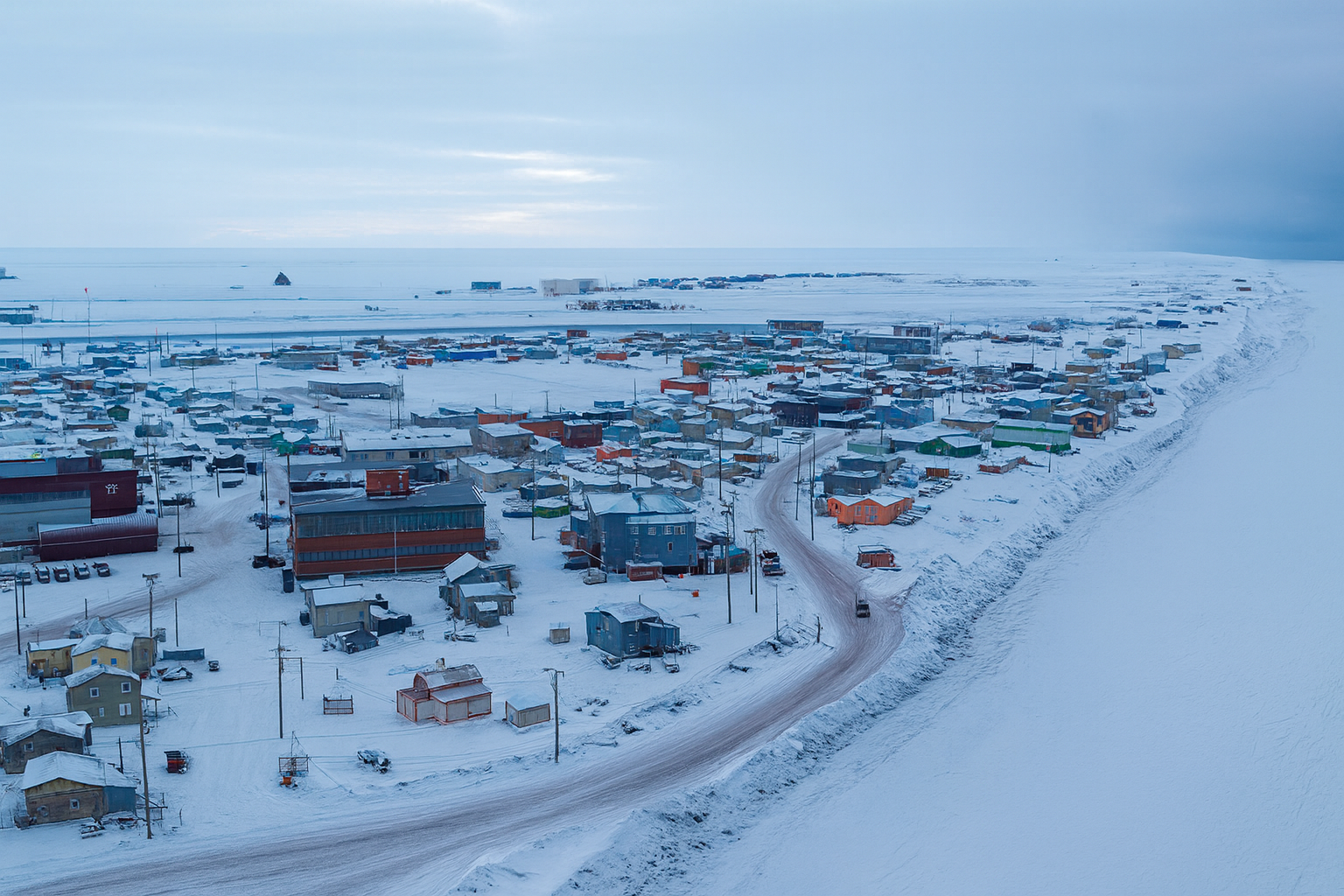
Average annual temperature: ~ −10.2 °C / +13.7 °F
Coldest month average: ~ −24 °C / −12 °F (in February)
Warmest month average: ~ +5°C / +41 °F (in July)
Population: ~5,000
Region: Alaska
Notable facts: The world’s coldest city and the northernmost city of the USA. The Arctic city experiences both polar night (about two months with no sunrise) and a long period of midnight sun, with sea ice and Arctic Ocean winds keeping temperatures extremely low year-round. The city was formerly known as “Barrow”.
2. Dudinka, Russia

Average annual temperature: ~ −9.4 °C / +15.1 °F
Coldest month average: ~ −27 °C / −16 °F (in January)
Warmest month average: ~ +14 °C / +57 °F (in July)
Population: ~19,000
Region & country: Krasnoyarsk Krai
Notable facts: Russia’s coldest and northernmost town/city. An Arctic port town on the Yenisei River, Dudinka spends most of the year under snow (with the exception of July and August), with strong winds and frequent blizzards adding to the extreme cold, particularly in the winter months.
3. Iqaluit, Canada
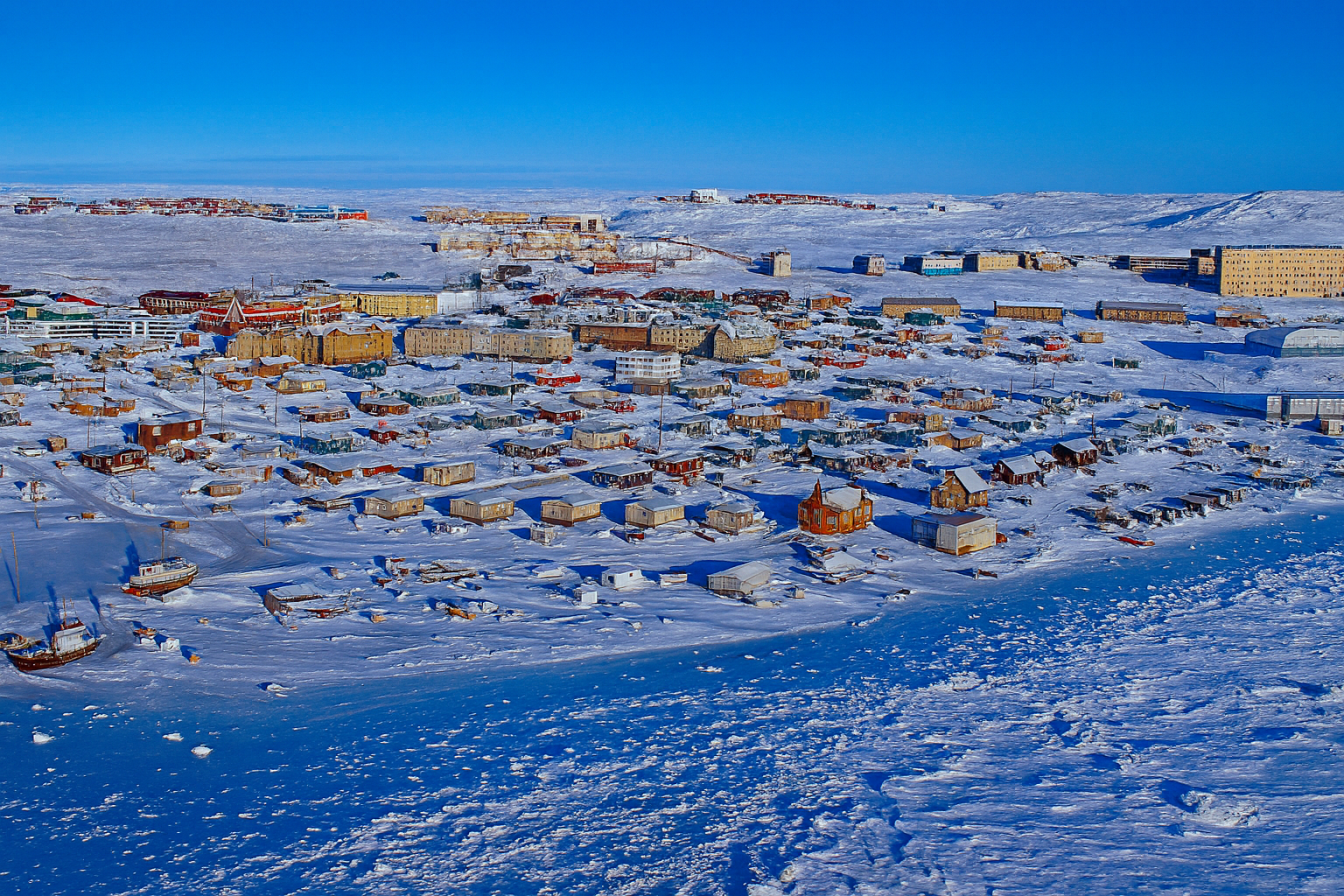
Average annual temperature: ~ −8.6 °C / +16.5 °F
Coldest month average: ~ −27 °C / −17 °F (in February)
Warmest month average: ~ +8 °C / +47 °F (in July)
Population: ~7,000
Region: Nunavut
Notable facts: Capital of Canada’s Nunavut Territory and the northernmost city of Canada. The city is located at the end of Frobisher Bay on southern Baffin Island, which is one of the largest islands in the world. Outside of the three summer months, the city is usually fully covered in snow.
4. Norilsk, Russia
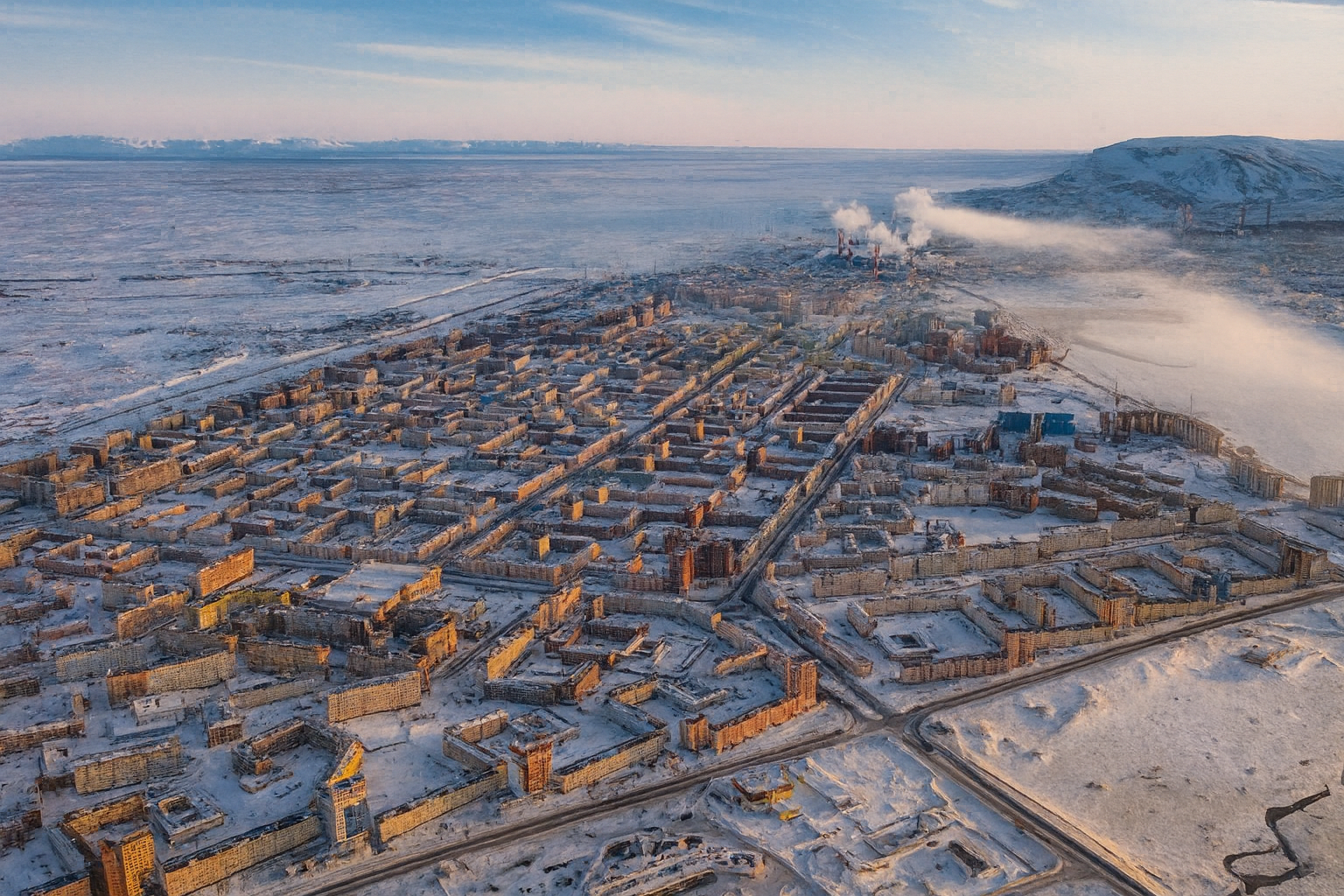
Average annual temperature: ~ −8.3 °C / +17.1 °F
Coldest month average: ~ −27 °C / −16 °F (in January)
Warmest month average: ~ +15 °C / +58 °F (in July)
Population: ~180,000
Region: Krasnoyarsk Krai
Notable facts: Russia’s northernmost large city and the world’s coldest city with a population of over 100,000. Located on the Taymyr Peninsula, Norilsk endures eight-month winters, frequent blizzards, and long polar nights on continuous permafrost.
5. Yakutsk, Russia
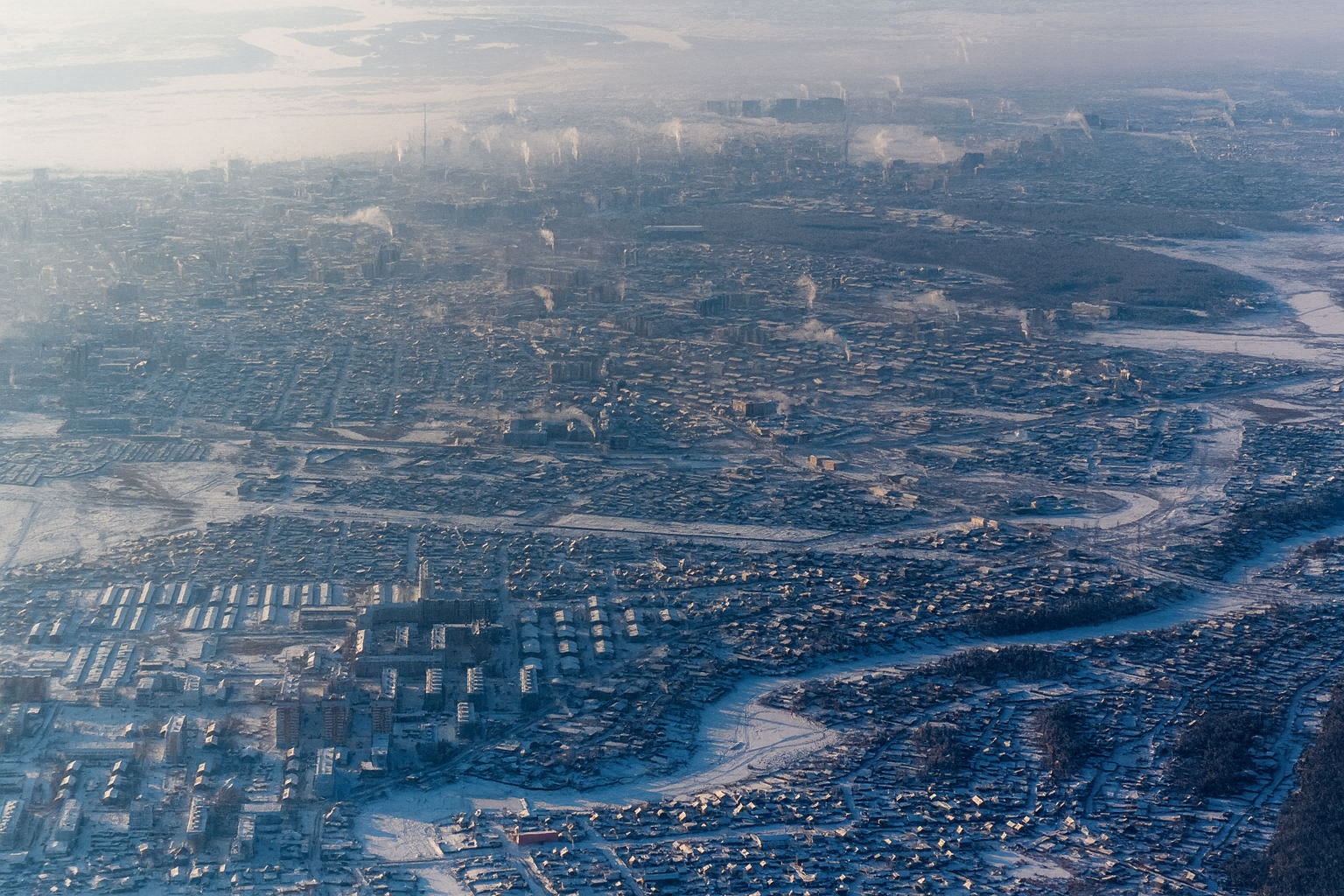
Average annual temperature: ~ −8.0 °C / +17.6 °F
Coldest month average: ~ −37 °C / −35 °F (in December)
Warmest month average: ~ +20 °C / +68 °F (in July)
Population: ~350,000
Region: Sakha Republic
Notable facts: The capital of the Russian Sakha Republic and the world’s largest city built on continuous permafrost. While summers in the city can be surprisingly warm, winter temperatures routinely drop below −40 °C / °F, giving Yakutsk one of the largest and most extreme seasonal temperature ranges in the world and among the coldest winters on Earth.
6. Aldan, Russia
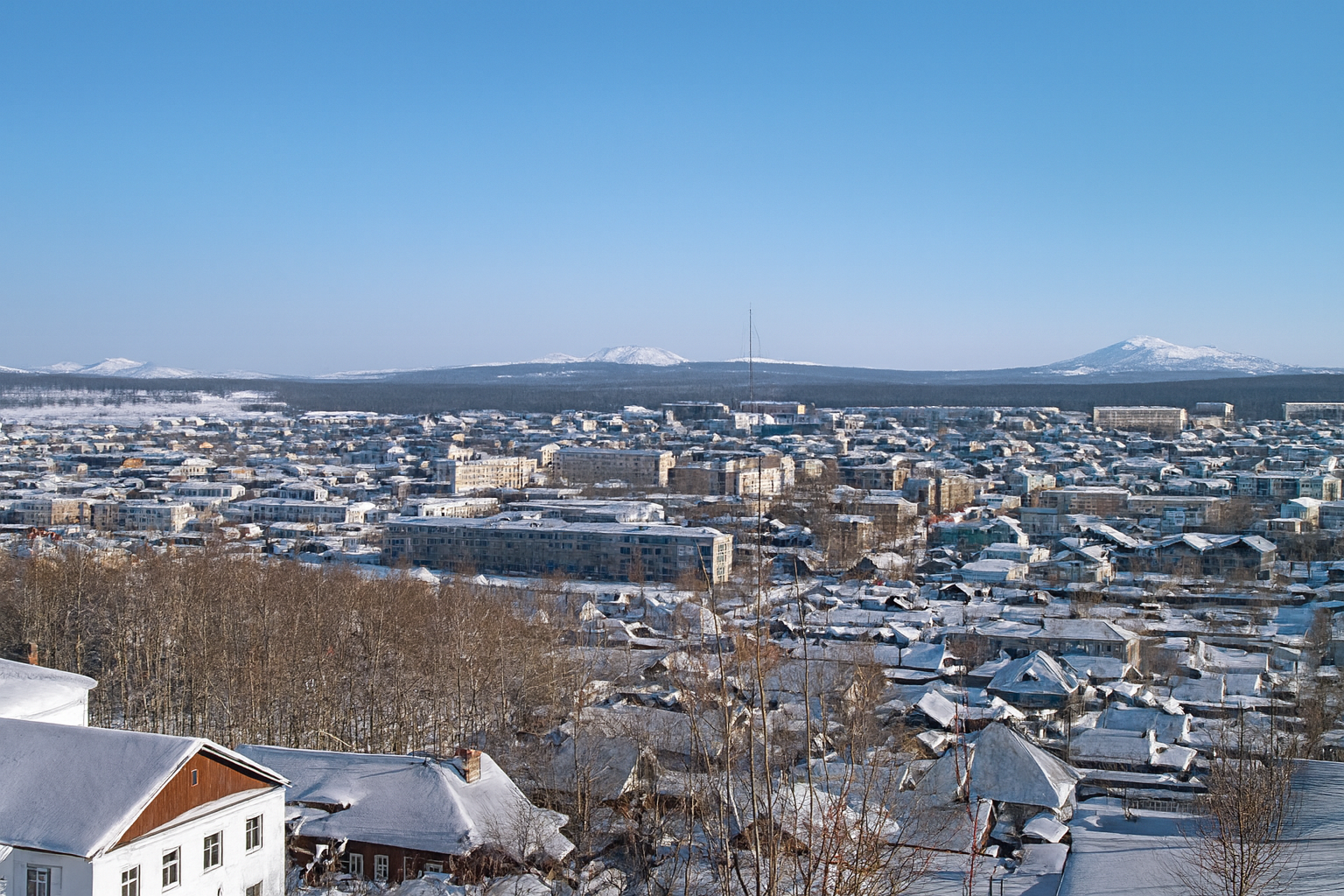
Average annual temperature: ~ −5.2 °C / +22.6 °F
Coldest month average: ~ −26 °C / −15 °F (in December)
Warmest month average: ~ +17 °C / +62 °F (in July)
Population: ~20,000
Region: Sakha Republic
Notable facts: One of Russia’s leading gold-mining towns. Summers are relatively warm with average highs above 20 °C / 68 °F, but winters in Aldan are harshly cold with average lows typically going well below -30 °C / -22 °F.
7. Yellowknife, Canada
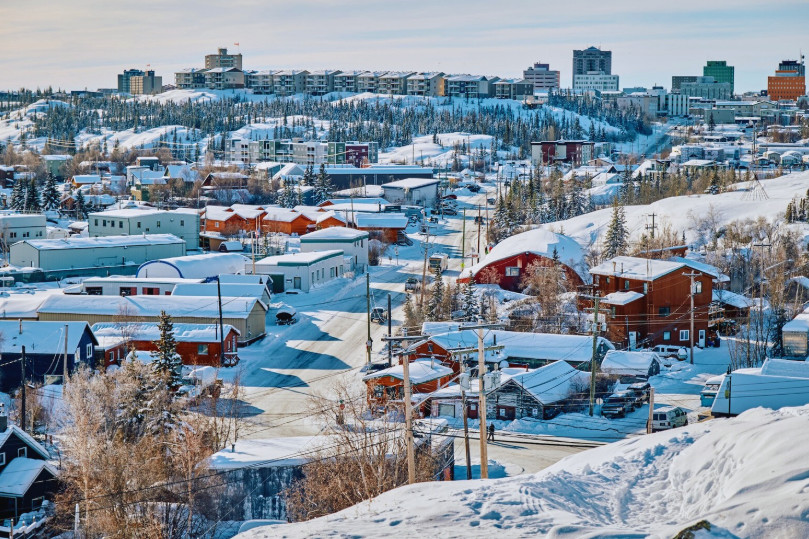
Average annual temperature: ~ −4.0 °C / +24.8 °F
Coldest month average: ~ −26 °C / −15 °F (in January)
Warmest month average: ~ +17 °C / +62 °F (in July)
Population: ~20,000
Region & country: Northwest Territories
Notable facts: The capital of Canada’s Northwest Territories. The city sits on the shores of Great Slave Lake, one of the largest lakes in the world, and, aside from its harsh cold, it is also known for its frequent aurora borealis displays.
8. Magadan, Russia
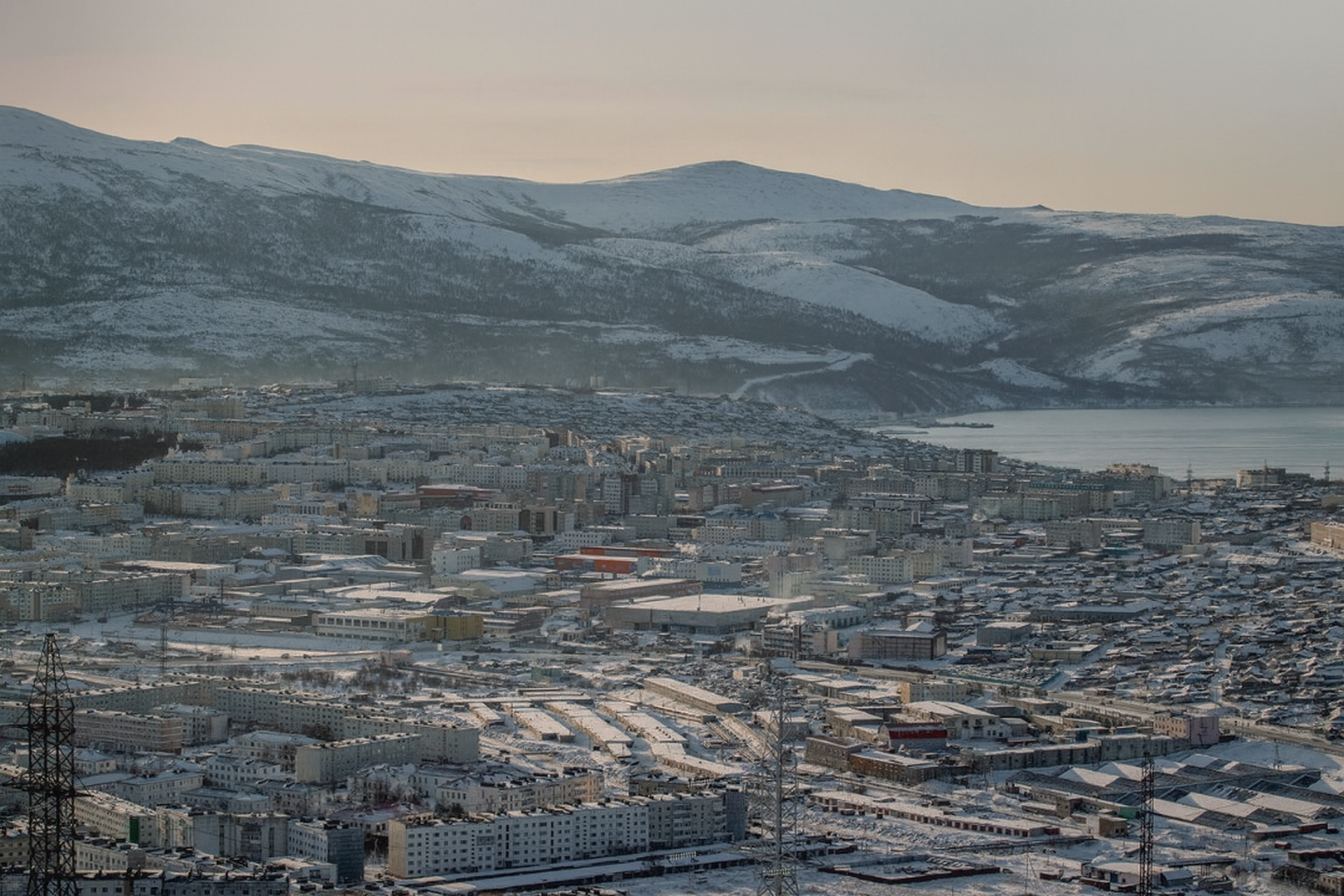
Average annual temperature: ~ −2.4 °C / +27.7 °F
Coldest month average: ~ −16 °C / +4 °F (in January)
Warmest month average: ~ +12 °C / +54 °F (in August)
Population: ~90,000
Region: Magadan Oblast
Notable facts: Capital of the Magadan Oblast in Northeastern Russia. It is a Pacific port town and operates year-round thanks to icebreakers. The town’s soil experiences continuous permafrost, though the winter lows are not as cold as those of the other coldest cities in the world.
9. Fairbanks, USA
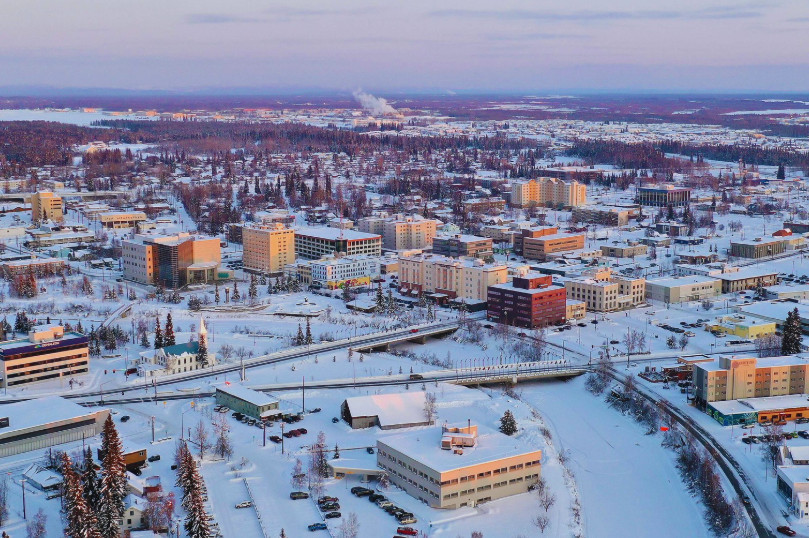
Average annual temperature: ~ −2.1 °C / +28.3 °F
Coldest month average: ~ −22 °C / −8 °F (in January)
Warmest month average: ~ +17 °C / +62 °F (in July)
Population: ~30,000
Region: Alaska
Notable facts: Fairbanks is located in interior Alaska and is known for being the city with the most extreme continental climate range in North America. Winter lows often drop below −40 °C / °F, while summer day highs can reach well above 25 °C / 77 °F.
10. Chita, Russia
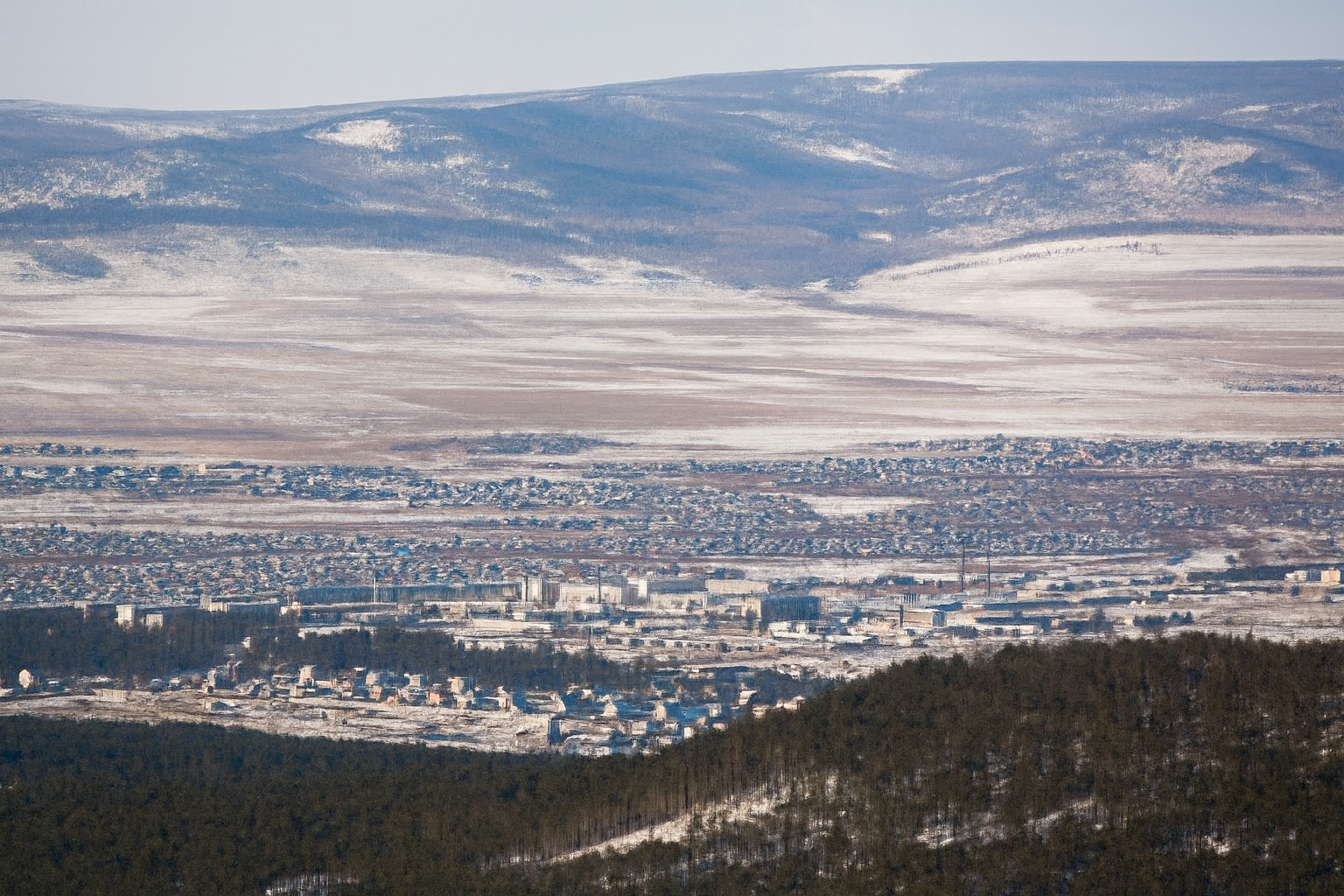
Average annual temperature: ~ −0.9 °C / +30.4 °F
Coldest month average: ~ −30 °C / −8 °F (in January)
Warmest month average: ~ +20 °C / +68 °F (in July)
Population: ~340,000
Region: Zabaykalsky Krai
Notable facts: Chita is the capital of Zabaykalsky Krai in Southeastern Russia. The city lies between the Yablonoi Mountains and the Chersky Mountains, which is the main reason for the city’s extremely low temperatures during the winter months. While summer highs often reach close to +30 °C / +86 °F, winter lows often go well below -30 °C / -8 °F, which is significantly colder than what other cities in the region experience.
The 10 Coldest Cities in the World: Overview
Click to expand/collapse
Region: | Population: | Average annual temperature: | |
|---|---|---|---|
1. Utqiagvik, USA | Alaska | ~5,000 | -10.2 °C / +13.7 °F |
2. Dudinka, Russia | Krasnoyarsk Krai | ~20,000 | -9.4 °C / +15.1 °F |
3. Iqaluit, Canada | Nunavut | ~7,000 | -8.6 °C / +16.5 °F |
4. Norilsk, Russia | Krasnoyarsk Krai | ~180,000 | -8.3 °C / +17.1 °F |
5. Yakutsk, Russia | Sakha Republic | ~350,000 | -8.0 °C / +17.6 °F |
6. Aldan, Russia | Sakha Republic | ~20,000 | -5.2 °C / +22.6 °F |
7. Yellowknife, Canada | Northwest Territories | ~20,000 | -4.0 °C / +24.8 °F |
8. Magadan, Russia | Magadan Oblast | ~90,000 | -2.4 °C / +27.7 °F |
9. Fairbanks, USA | Alaska | ~30,000 | -2.1 °C / +28.3 °F |
10. Chita, Russia | Zabaykalsky Krai | ~340,000 | -0.9 °C / +30.4 °F |
The ten coldest cities in the world by average annual temperature. Only permanently inhabited cities and towns are included in the ranking. Villages, hamlets, military bases, remote research stations (e.g., Antarctica’s Vostok), and other non-permanent settlements are excluded from the ranking.
The 10 Coldest Cities in the World: Chart
Click to expand/collapse

The 10 Coldest Cities in the World: Summary
Click to expand/collapse
The ranking of the ten coldest cities in the world provides an overview of the world’s most frigid urban centers. By examining a ranking of permanently inhabited cities based on the single metric of average annual air temperature, we can gain a clearer understanding of the challenges and adaptations inherent to these unique human settlements. The foundation for this analysis is a dataset that ranks the ten coldest cities on Earth, offering a quantitative basis for exploring the frontiers of urban endurance.
The Forefront of Frigidity: A Profile of the Top-Ranked Cities
By examining the top five cities on the list, we can identify the most intense expressions of cold-climate urban living and establish a baseline for the environmental pressures involved. These locations, spanning from the Alaskan Arctic coast to the interior of Siberia, represent the pinnacle of human settlement in relentlessly cold environments. The following table distills the key data points for these leading cities.
| City (Country) | Avg. Annual Temp (°C) | Defining Environmental Feature | Population Scale |
| Utqiagvik (USA) | ~ -10.2 °C | Northernmost US city with polar night | Small Town (~5,000) |
| Dudinka (Russia) | ~ -9.4 °C | Arctic port town with strong winds and frequent blizzards | Port Town (~19,000) |
| Iqaluit (Canada) | ~ -8.6 °C | Northernmost city of Canada on southern Baffin Island | Small Town (~7,000) |
| Norilsk (Russia) | ~ -8.3 °C | World’s coldest city with a population over 100,000 | Major City (~180,000) |
| Yakutsk (Russia) | ~ -8.0 °C | World’s largest city built on continuous permafrost | Major City (~350,000) |
The data reveals that each city not only registers an exceptionally low average annual temperature but is also defined by a unique and formidable geographical marker. These defining features, such as continuous permafrost, the occurrence of polar night, or exposure to Arctic Ocean winds, are not just characteristics but compounding environmental stressors. They challenge urban planning, infrastructure resilience, and resident well-being in ways not captured by temperature alone. This profile of the top-ranked cities sets the stage for a broader examination of their geographical distribution.
The Geographical Nexus of Cold: A Russian and North American Phenomenon
Understanding the geographical distribution of the world’s coldest cities is of strategic importance, as it highlights where the intersection of human settlement and extreme climate is most concentrated. An analysis of the data reveals that these urban centers are not randomly scattered but are clustered within specific national and regional territories, painting a clear geopolitical landscape of extreme cold environments. This concentration is not coincidental; it directly reflects the planet’s largest contiguous subarctic and arctic landmasses—namely, the Siberian platform in Russia and the Canadian Shield/Alaskan interior in North America—which are the primary theaters for this type of extreme cold urbanism.
The list of the ten coldest cities is overwhelmingly dominated by Russia, which contains six of the ten locations. These Russian cities are further concentrated in two primary regions: Krasnoyarsk Krai (home to Dudinka and Norilsk) and the Sakha Republic (home to Yakutsk and Aldan). This strong Russian presence reflects the nation’s long-standing strategic and economic imperatives in developing its vast Siberian and Far Eastern territories.
The remaining four cities are located in North America. The United States is represented by two Alaskan cities: Utqiagvik, the northernmost city in the country, and Fairbanks, located in the state’s interior. Similarly, Canada is home to two cities on the list: Iqaluit, the capital of the Nunavut Territory, and Yellowknife, the capital of the Northwest Territories. These North American settlements, much like their Russian counterparts, often serve as crucial administrative or resource hubs in their respective northern regions. The shared geographical latitudes and continental positions of these cities lead directly to a common set of environmental challenges.
The Defining Features of Cold-Climate Ecosystems
Beyond the simple metric of average temperature, a unique set of environmental conditions defines life in these locations. The source data consistently highlights several recurring phenomena that shape the natural and built environments of the world’s coldest cities. This section explores the combined impact of three of the most significant of these features on infrastructure and human activity.
• The Foundation of Permafrost: A common feature across many of these cities is the presence of permafrost—ground that remains frozen year-round. This has profound implications for construction, infrastructure, and the local ecosystem. The data specifically notes that Yakutsk is the world’s largest city built on continuous permafrost, a defining engineering challenge that dictates all forms of development. Permafrost is also a key characteristic of the soil in Norilsk and Magadan, reinforcing its status as a foundational element of these cold-climate urban environments.
• Extreme Seasonal Temperature Ranges: A remarkable characteristic of many of these cities is the dramatic variance between their severe winters and surprisingly warm summers. This is most pronounced in Yakutsk, where winter temperatures routinely fall below -40°C while summer temperatures can reach +20°C. Similarly, Fairbanks is noted for having the most extreme range in North America, with winter lows below -40°C and summer highs exceeding +25°C. Chita also exemplifies this pattern, with summer highs often nearing +30°C. This phenomenon, known as extreme continentality, presents a unique challenge, requiring infrastructure and lifestyles that can adapt to a thermal range exceeding 60-70°C annually.
• Polar Phenomena: The high-latitude locations of several cities subject them to unique astronomical and atmospheric events. The data highlights that Utqiagvik and Norilsk experience both polar night, a period of over 24 hours without sunrise in winter, and the midnight sun in summer. In a different expression of high-latitude conditions, Yellowknife is noted for its frequent and spectacular aurora borealis displays. These phenomena are not just environmental curiosities; they have direct psychological and operational impacts, fundamentally shaping the rhythm of daily life and work.
These powerful environmental forces have a direct impact on the human dimension of these unique cities.
The Human Dimension: Population and Endurance
The data on the world’s coldest cities reveals a wide spectrum of human settlements, challenging the notion that such harsh climates can only support small, isolated communities. An analysis of the population figures demonstrates the remarkable scale and diversity of urban life that can be sustained in these regions.
On one end of the spectrum are smaller but regionally significant settlements. These include Utqiagvik, with a population of approximately 5,000, and Iqaluit, with around 7,000 residents. On the other end are major urban centers that rival cities in more temperate climates, including Norilsk (~180,000), Yakutsk (~350,000), and Chita (~340,000). This vast difference in scale suggests a functional divergence: smaller settlements like Utqiagvik and Iqaluit serve primarily as administrative and cultural hubs for indigenous populations and vast territories, while metropolises like Yakutsk and Norilsk are sustained by significant industrial or resource-extraction economies capable of supporting large-scale urban infrastructure.
These ten coldest cities in the world, regardless of their size, represent remarkable examples of human adaptation. From small Arctic towns to major Siberian industrial centers, they demonstrate a capacity for endurance and community-building in the face of persistent and extreme environmental conditions.
The 10 Coldest Cities in the World: FAQs
Click to expand/collapse
How were the world’s coldest cities ranked?
The ranking is based on the average annual air temperature for permanently inhabited cities. The data is compiled from long-term climate information provided by national meteorological services.
Were any cold places left off the list?
Yes. The list exclusively includes permanently inhabited cities and towns. It excludes smaller settlements such as villages and hamlets, along with military bases and remote research stations like Vostok in Antarctica.
Does the coldest city in the world also have the most extreme winter?
No. While Utqiagvik, Alaska, USA (formerly known as Barrow) is the coldest city on Earth with the coldest annual average temperature (−10.2 °C / +13.7 °F), the city of Yakutsk, Russia, experiences the most severe winter month. In winter, starting from December, Yakutsk’s average temperature plummets to a staggering average temperature of -37 °C / -35 °F.
Which city has the largest temperature swing between winter and summer?
Yakutsk, Russia, stands out for having one of the world’s most extreme seasonal temperature ranges. The average temperature of its warmest month (+20 °C) is a full 57 °C higher than the average of its coldest month (−37 °C). This enormous fluctuation, combined with its brutally cold winters, gives Yakutsk one of the most extreme and challenging climates of any major city on Earth.
Are any of these extremely cold places large cities?
Yes, several of the coldest cities in the world are major urban centers. Norilsk (~180,000 residents) is the world’s coldest city with a population over 100,000. Other large cold cities include Yakutsk (~350,000 residents) and Chita (~340,000 residents), all located in Russia.
What is permafrost and where is it found?
Permafrost is ground that remains continuously frozen throughout the year. Several of the world’s coldest cities are built on it, most notably Yakutsk, which is the largest city in the world built on continuous permafrost, a feat that poses unique and continuous engineering challenges for urban infrastructure. The Russian cities of Norilsk and Magadan are also located in areas of continuous permafrost.
What is a ‘polar night’?
A polar night is a period during which the sun does not rise above the horizon. The world’s coldest city, Utqiagvik, in Alaska, USA, experiences a polar night that lasts for approximately two months each winter.
Which country has the most cities on this list of the world’s ten coldest cities?
Russia dominates the list of the coldest cities in the world, accounting for six of the world’s ten coldest cities. Three of these, Dudinka (#2), Norilsk (#4), and Yakutsk (#5), are in the top five. The remaining four cities are located in the United States, more precisely in the U.S. state of Alaska (Utqiagvik, Fairbanks), and Canada (Iqaluit, Yellowknife).
Sources used for Ranking:
National meteorological services (e.g. NOAA), airport/climate stations, and international climate databases (e.g. WDC Climate)


