
Nothing on this planet stands taller than a mountain. The world’s highest mountains, such as Mount Everest or K2, are powerful monuments of nature. But even the highest mountains in the world do not come alone. They are usually part of wide-spanning mountain ranges, each including a countless number of mountains.
All of the ten highest mountains in the world are part of just the two highest mountain ranges in the world. The following list, therefore, lists the world’s highest mountain ranges, sorted by the respective peak mountain height. Just a heads up: The Asian continent very clearly dominates this ranking.
Ranking Criteria & Methodology:
The ranking of the world’s ten highest mountain ranges is based on the height of the peak of a mountain range. All mountain ranges of planet Earth are eligible, excluding underwater mountain ranges, however.
Note: This ranking lists the ten highest mountain ranges in the world. There is a separate ranking for the world’s ten tallest buildings.
The 10 Highest Mountain Ranges in the World:
1. Himalayas

Peak mountain: Mount Everest (8,848 meters / 29,029 feet) in Nepal/China
Location of peak mountain: Nepal/China
Location of mountain range: South Asia/East Asia (Bhutan, China, India, Nepal & Pakistan)
The Himalayas are, of course, first and foremost known for Mount Everest, the world’s highest mountain, which lies at the border of Nepal and China. However, the mountain range offers many more mountains, most of which are among the world’s highest peaks. The Himalayas stretch across five countries (Bhutan, China, India, Nepal & Pakistan) and the range also separates the Indian subcontinent from the Tibetan Plateau in China. The name derives from the Sanskrit words hima (“Snow”) and a-laya (“receptacle”), and the mountain range can therefore be translated to “Snow receptacle” or “Abode of snow”.
2. Karakoram
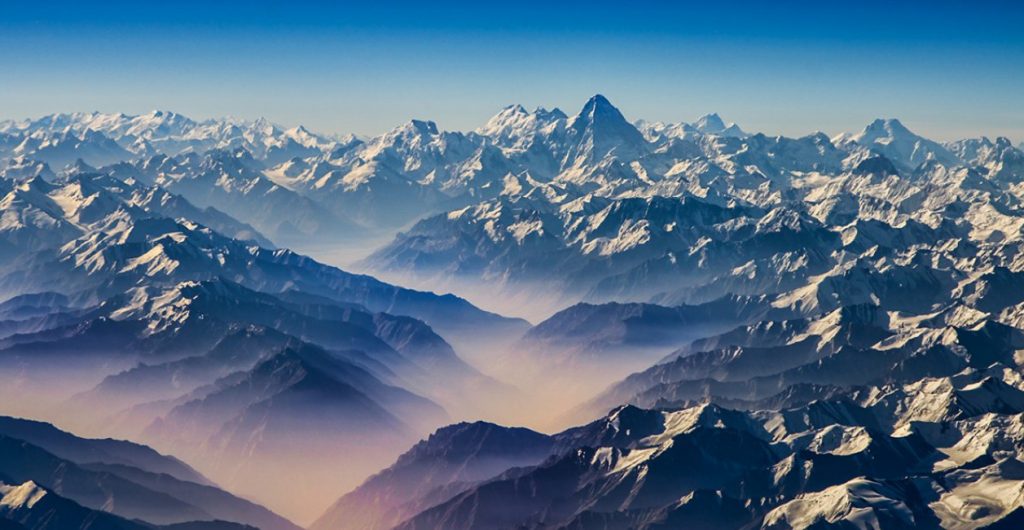
Peak mountain: K2 (8,611 meters / 28,251 feet)
Location of peak mountain: China/Pakistan
Location of mountain range: South Asia/East Asia (Afghanistan, China, India, Pakistan & Tajikistan)
The Karakoram is the second-highest mountain range in the world. It stretches over Afghanistan, China, India, Pakistan, and Tajikistan. The range’s peak mountain, the K2, is the second-highest mountain on Earth. The mountain also marks the border between China and Pakistan. Aside from climbers, the range also attracts the interest of geologists worldwide, as it lies at the boundary between the Eurasian and the Indo-Australian plates and is therefore highly geologically active. The name “Karakoram” is Turkic in origin and can be translated to “Black gravel”.
3. Hindu Kush

Source: Msanamsaeed / Licensed under CC BY-SA 3.0
Peak mountain: Tirich Mir (7,708 meters / 25,289 feet)
Location of peak mountain: Pakistan
Location of mountain range: South Asia/Central Asia (Afghanistan, Pakistan & Tajikistan)
Bordering both the Himalayas and the Karakoram, the Hindu Kush represents the third-highest mountain range in the world. The Hindu Kush is mostly located in Afghanistan but also stretches to northern Pakistan and Tajikistan. Its peak mountain, the Tirich Mir (or Terich Mir), is located entirely in Pakistan, however. The origins of the name are not exactly clear. While “Hindu” obviously refers to Hindus, the meaning of the word “Kush” is uncertain, but could be derived from the Persian language, where it means “to kill”. The mountain range could therefore be translated to “Hindu Killer”, referring to the many Indians who died trying to climb or pass the mountain range in the past.
4. Pamir Mountains

Source: Hiroki Ogawa / Licensed under CC BY 3.0
Peak mountain: Kongur Tagh (7,649 meters / 25,095 feet)
Location of peak mountain: China
Location of mountain range: Central Asia/East Asia/South Asia (Afghanistan, China, Kyrgyzstan & Tajikistan)
The Pamir Mountains collectively form the fourth-highest mountain range in the world. The wide spanning range is a direct neighbor of the Himalayas, the Karakoram, as well as the Hindu Kush. While most of the Pamir Mountains lie in Tajikistan, the range’s peak mountain, the Kongur Tagh, lies entirely within China. The mountain range also stretches to parts of Afghanistan and Tajikistan. There are many theories on the origins of the range’s name, none of which could be confirmed with certainty so far. The mountain range has historically also been referred to as the “Roof of the World”, a title that it now shares with the neighboring ranges.
5. Daxue Mountains

Source: rheins / Licensed under CC BY 3.0
Peak mountain: Mount Gongga (7,556 meters / 24,790 feet)
Location of peak mountain: China
Location of mountain range: China
The Daxue Mountains form the fifth-highest mountain range in the world. It lies entirely within China, in the Southwest Chinese province of Sichuan, to be exact. The Daxue Mountains are therefore the world’s highest mountain range located entirely within just one country. Mount Gongga represents the peak of the mountain range. The name is therefore unsurprisingly Chinese. It can be translated to “Great Snow Mountains”.
6. Kakshaal Too

Source: lwtt93 / Licensed under CC BY 3.0
Peak mountain: Jengish Chokusu (7,439 meters / 24,406 feet)
Location of peak mountain: China/Kyrgyzstan
Location of mountain range: Central Asia/East Asia (Kyrgyzstan & China)
The Kakshaal Too ranks sixth among the world’s highest mountain ranges. It is located mostly in Kyrgyzstan, while parts of it also reach China. Its highest point, Mount Jengish Chokusu, lies right on the Kyrgyz-Chinese border and claims the title of the highest peak in Kyrgyzstan. The name of Kakshaal Too is Kyrgyz and translated means “Blue Range”.
7. Kunlun Mountains

Peak mountain: Liushi Shan (7,167 meters / 23,514 feet)
Location of peak mountain: China
Location of mountain range: China
The Kunlun Mountains are a mountain range in China, situated to the north of the Tibetan Plateau. Mount Liushi Shan stands as the highest peak of the Kunlun range and is also called the “Kunlun Goddess”. All of the Kunlun Mountains carry high historical and mythological significance in Chinese civilization, often associated with celestial mountains.
8. Nyenchen Tanglha Mountains

Source: Pseudois / Licensed under CC BY-SA 3.0
Peak mountain: Mount Nyenchen Tanglha (7,162 meters / 23,497 feet)
Location of peak mountain: China
Location of mountain range: China
The Nyenchen Tanglha Mountains represent another significant mountain range in China, nestled to the north of the Tibetan Plateau. The range is named after Mount Nyenchen Tanglha, which fittingly is the highest mountain in this range. Nyenchen Tanglha is deeply rooted in Tibetan culture and mythology, where the mountain has long been seen as a deity. The name of the range and its peak mountain literally translates to “Big God Mountain” in Tibetan.
9. Andes
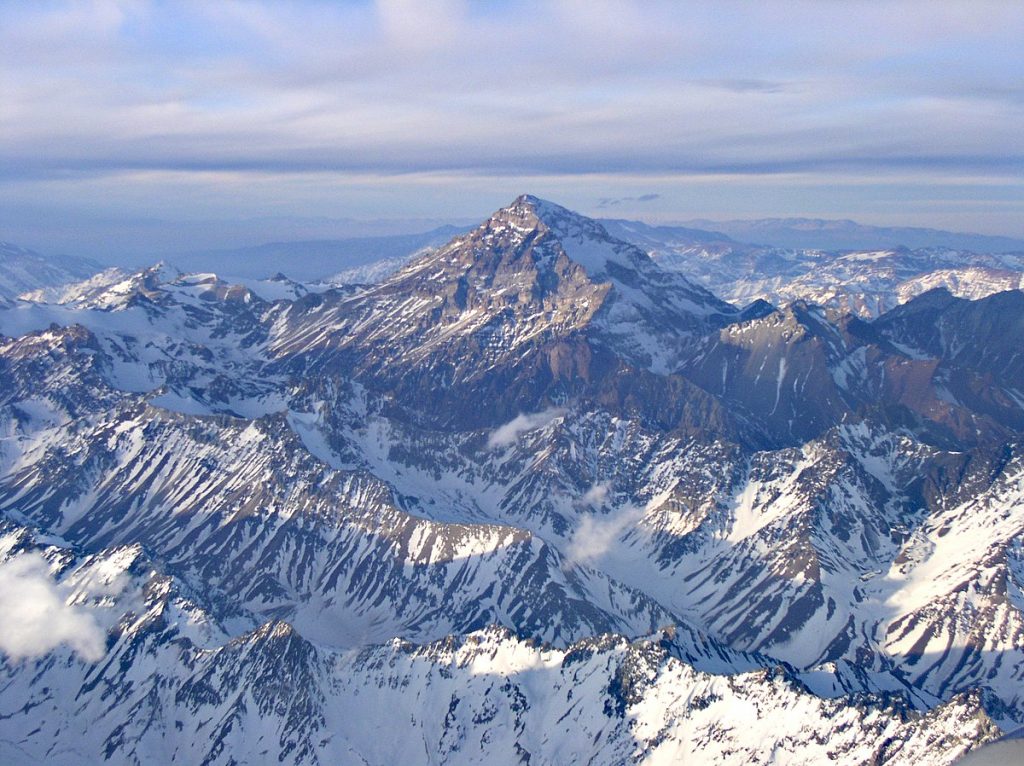
Source: Beatriz Moisset / Licensed under CC BY-SA 3.0
Peak mountain: Aconcagua (6,962 meters / 22,837 feet)
Location of peak mountain: Argentina
Location: South America (Argentina, Bolivia, Chile, Colombia, Ecuador, Peru & Venezuela)
The Andes stand as the highest mountain range outside of Asia. Located in Western South America, the range spans seven countries, including Argentina, Chile, Peru, Bolivia, Colombia, Ecuador, and even reaching Venezuela. Argentina’s Mount Aconcagua represents the highest mountain of the Andes. The range’s name likely originates from the Quechua language, meaning “East”, as the Quechua people lived in modern-day Peru and had the Andes to their east.
10. Cordillera de la Ramada
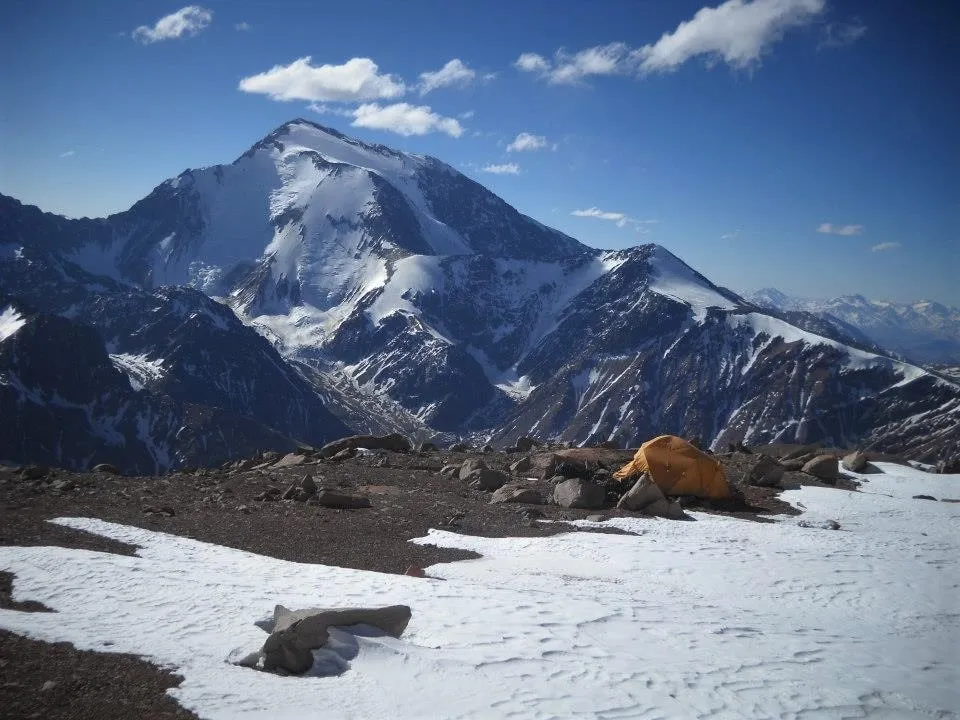
Source: Andes Vertical
Peak mountain: Mercedario (6,720 meters / 22,050 feet)
Location of peak mountain: Argentina
Location of mountain range: Argentina
The list of the ten highest mountain ranges in the world concludes with the Cordillera de la Ramada. Located entirely in northwestern Argentina, the range is especially known for its spectacular peak mountain, the Mercedario. The mountain range’s name is Spanish and translates to “Range of the Shelter”.
Top 10 Highest Mountain Ranges in the World: Overview
Click to expand/collapse
Location: | Peak mountain: | Height of peak mountain: | |
|---|---|---|---|
1. Himalayas | China & Nepal | Mount Everest | 8,848 meters / 29,029 feet |
2. Karakoram | South Asia & East Asia | K2 | 8,611 meters / 28,251 feet |
3. Hindu Kush | South Asia & Central Asia | Tirich Mir | 7,708 meters / 25,289 feet |
4. Pamir Mountains | Central Asia, East Asia & South Asia | Kongur Tagh | 7,649 meters / 25,095 feet |
5. Daxue Mountains | China | Mount Gongga | 7,556 meters / 24,790 feet |
6. Kakhshaal Too | Kyrgyzstan & China | Jengish Chokusu | 7,439 meters / 24,406 feet |
7. Kunlun Mountains | China | Luishi Shan | 7,167 meters / 23,514 feet |
8. Nyenchen Tanglha Mountains | China | Mount Nyenchen Tanglha | 7,162 meters / 23,497 feet |
9. Andes | South America | Aconcagua | 6,961 meters / 22,837 feet |
10. Cordillera De La Ramada | Argentina | Mercedario | 6,720 meters / 22,050 feet |


