
The European Union, or EU, across its 27 member states, is home to around 450 million people in total. Most of those live in cities nowadays as the EU includes some of the world’s most historic and vibrant, but also dynamic and influential urban centers anywhere in the world. These cities play a vital role in shaping culture, politics, and the economy across the European continent and beyond.
The following ranking lists the ten largest cities in the European Union by population in the city proper.
Ranking Criteria & Methodology:
The ranking of the ten largest cities in the European Union is based on the most recent official population figures available. Only cities within the European Union are included, and populations are counted within official city limits (city proper), not including populations living in the wider metropolitan or urban areas. Data comes from national statistical offices and verified demographic sources.
Note: This ranking lists the ten largest cities in the European Union. There are separate rankings for the ten largest cities in the USA and the ten largest cities in the world.
The 10 Largest Cities in the European Union (2025):
1. Berlin

Population in city: ~ 3.90 million
Population in metro area: ~ 4.68 million
State/Region: Berlin
Country: Germany
Size: 891.3 km² / 344.1 sq mi
Density: 4,109 people per km2 / 10,640 people per sq mi
Year of foundation: 1237
Nickname: “Athens on the Spree”
2. Madrid

Population in city: ~ 3.32 million
Population in metro area: ~ 6.13 million
State/Region: Community of Madrid
Country: Spain
Size: 604.3 km2 / 233.3 sq mi
Density: 5,496 people per km2 / 14,248 people per sq mi
Year of foundation: 9th Century (exact year unknown)
Nickname: “The Town and Court”
3. Rome

Population in city: ~ 2.75 million
Population in metro area: ~ 4.22 million
State/Region: Lazio
Country: Italy
Size: 1,287.4 km2 / 497.1 sq mi
Density: 2,134 people per km2 / 5,527 people per sq mi
Year of foundation: 753 BC
Nickname: “The Eternal City”
4. Paris

Population in city: ~ 2.05 million
Population in metro area: ~ 13.17 million
State/Region: Ile-de-France
Country: France
Size: 105.4 km2 / 40.7 sq mi
Density: 19,523 people per km2 / 51,250 people per sq mi
Year of foundation: 3rd Century BC (exact year unknown)
Nickname: “The City of Love”
5. Vienna

Population in city: ~ 2.03 million
Population in metro area: ~ 4.70 million
State/Region: Vienna
Country: Austria
Size: 414.8 km2 / 160.2 sq mi
Density: 4,903 people per km2 / 12,687 people per sq mi
Year of foundation: 1st Century (exact year unknown)
Nickname: “The City of Music”
6. Hamburg
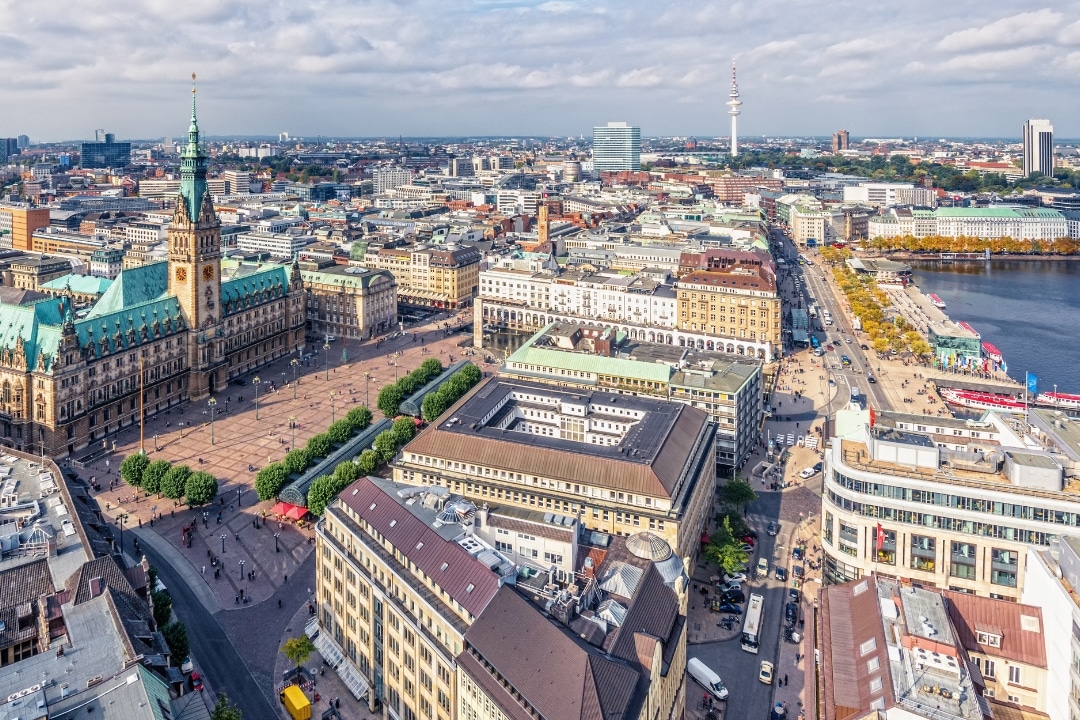
Population in city: ~ 1.86 million
Population in metro area: ~ 5.43 million
State/Region: Hamburg
Country: Germany
Size: 755.1 km2 / 291.5 sq mi
Density: 2,463 people per km2 / 6,391 people per sq mi
Year of foundation: 9th Century (exact year unknown)
Nickname: “Gateway to the World”
7. Warsaw

Population in city: ~ 1.86 million
Population in metro area: ~ 3.27 million
State/Region: Masovia
Country: Poland
Size: 517.2 km² / 199.7 sq mi
Density: 3,597 people per km2 / 9,346 people per sq mi
Year of foundation: 1300
Nickname: “Phoenix City”
8. Bucharest

Population in city: ~ 1.78 million
Population in metro area: ~ 2.30 million
State/Region: Bucharest
Country: Romania
Size: 240 km² / 92.3 sq mi
Density: 7,416 people per km2 / 19,347 people per sq mi
Year of foundation: 1459
Nicknames: “Little Paris”
9. Barcelona
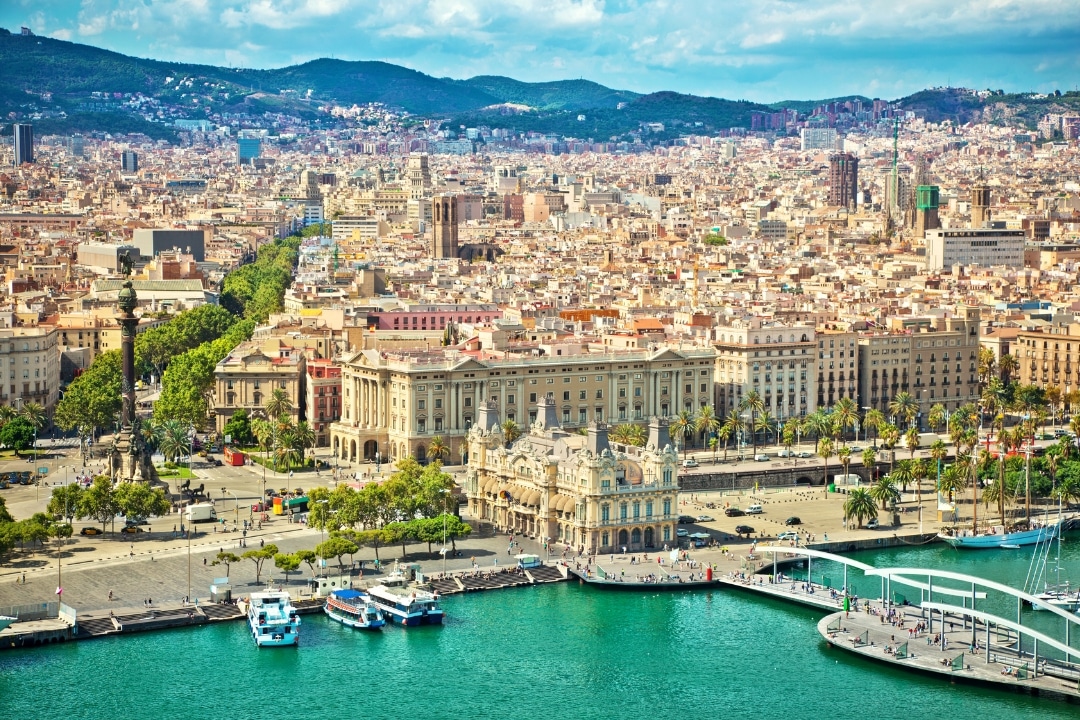
Population in city: ~ 1.73 million
Population in metro area: ~ 5.47 million
State/Region: Catalonia
Country: Spain
Size: 101.4 km² / 39.2 sq mi
Density: 17,128 people per km2 / 44,358 people per sq mi
Year of foundation: 3rd Century BC (exact year unknown)
Nicknames: “City of Counts”
10. Budapest

Population in city: ~ 1.69 million
Population in metro area: ~ 3.30 million
State/Region: Budapest
Country: Hungary
Size: 525.1 km² / 202.7 sq mi
Density: 3,219 people per km2 / 8,366 people per sq mi
Year of foundation: 41
Nicknames: “City of Spas”
Top 10 Largest Cities in the European Union (2025): Overview
Click to expand/collapse
Country: | Size: | Population: | |
|---|---|---|---|
1. Berlin | Germany | 891.3 km² / 344.1 sq mi | ~ 3.9 million |
2. Madrid | Spain | 604.3 km2 / 233.3 sq mi | ~ 3.32 million |
3. Rome | Italy | 1,287.4 km2 / 497.1 sq mi | ~ 2.75 million |
4. Paris | France | 105.4 km2 / 40.7 sq mi | ~ 2.05 million |
5. Vienna | Austria | 414.8 km2 / 160.2 sq mi | ~ 2.03 million |
6. Hamburg | Germany | 755.1 km2 / 291.5 sq mi | ~ 1.86 million |
7. Warsaw | Poland | 517.2 km² / 199.7 sq mi | ~ 1.86 million |
8. Bucharest | Romania | 240 km² / 92.3 sq mi | ~ 1.78 million |
9. Barcelona | Spain | 101.4 km² / 39.2 sq mi | ~ 1.73 million |
10. Budapest | Hungary | 525.1 km² / 202.7 sq mi | ~ 1.69 million |
The ten largest cities in the European Union is based on the most recent official population figures available. Only cities within the European Union are included, and populations are counted within official city limits (city proper), not including populations living in the wider metropolitan or urban areas. Data comes from national statistical offices and verified demographic sources.
Top 10 Largest Cities in the European Union (2025): Summary
Click to expand/collapse
The European Union (EU), with its 27 member states, is a highly populated continent, housing approximately 450 million people in total. Its cities are not merely population centers but are among the most historic and vibrant, but also dynamic and influential urban centers anywhere in the world, playing a vital role in shaping culture, politics, and the economy across the European continent and beyond.
The provided ranking of the ten largest cities in the European Union is based on the most recent official population figures available. Crucially, the ranking adheres to a strict methodology:
- Geographic Scope: Only cities within the European Union are included.
- City Population Definition: Populations are counted within official city limits (city proper), not including populations living in the wider metropolitan or urban areas. This distinction is important, as metropolitan area populations can significantly exceed city proper figures (e.g., Paris’s city proper population is ~2.05 million, while its metro area is ~13.17 million).
- Data Sources: Data is sourced from national statistical offices and verified demographic sources.
Most Important Facts:
- Germany & Spain Represented Twice: Germany, the most populous country in the EU, as well as Spain, are the only countries with two cities among the ten largest cities in the European Union (Berlin and Hamburg for Germany, Madrid and Barcelona for Spain), indicating both these countries’ significant city proper populations within the EU.
- Population Disparity (City vs. Metro): There is a substantial difference between city proper and metropolitan area populations for many cities. Paris exemplifies this more than any other city in the EU, with its metropolitan area being over six times larger than its city proper population, suggesting highly dense urban cores surrounded by extensive suburbanization.
- Historical Significance: Many of the ten largest cities in the European Union boast ancient origins, with Rome unsurprisingly being the oldest city on the list, founded in 753 BC, and others like Paris and Barcelona having been founded in the 3rd Century BC, highlighting their deep historical roots and enduring importance. Budapest’s foundation in 41 AD also marks it as exceptionally old.
- Diverse Geographic Representation: The ten largest cities in the EU include cities from various regions of the EU, encompassing Western, Southern, and Central Europe (Germany, Spain, Italy, France, Austria, Poland, Romania, and Hungary).
- Unique Identities: Each city carries a distinct “nickname” that reflects its cultural, historical, geographic, or economic significance (e.g., “The Eternal City” for Rome, “The City of Music” for Vienna, “Gateway to the World” for Hamburg, and “Phoenix City” for Warsaw, referencing its resilience).
- Density Variations: Population density varies significantly among these large cities. Paris and Barcelona stand out with exceptionally high densities (19,523 and 17,128 people per km², respectively), indicating very compact urban designs within their official city limits. In contrast, Rome, despite being the third most populous city in the EU, has a much lower density due to its exceptionally large area.
Top 10 Largest Cities in the European Union (2025): FAQs
Click to expand/collapse
How many people live in the European Union, and what role do its cities play?
The European Union (EU), comprised of 27 member states, is home to approximately 450 million people. A significant portion of this population resides in cities. These cities tend to be crucial for shaping culture, politics, and the economy of the EU, but also the rest of Europe, and to a certain degree also globally.
How are the largest cities in the EU defined?
The ranking of the largest cities in the European Union is based on the most recent official population figures. The ranking specifically counts populations within the official city limits (city proper) and excludes populations from wider metropolitan or urban areas. Only cities located within the European Union are included in this ranking (excluding the rest of the continent), with data sourced from national statistical offices and verified demographic sources.
Which city is the largest in the EU by city proper population, and what are some of its characteristics?
Berlin is the largest city in the EU by city proper population, with approximately 3.90 million residents. The city is the capital of Germany and has a size of 891.3 km² (344.1 sq mi) and a density of 4,109 people per km².
How does the population density vary among the top EU cities?
Population density varies significantly among the largest cities in the European Union. For instance, Paris, with a population of approximately 2.05 million within a relatively small area of 105.4 km², has an extremely high density of 19,523 people per km². In contrast, Rome, with a larger population of 2.75 million, but also an exceptionally large area size of 1,287.4 km², has a much lower density of 2,134 people per km². Barcelona also exhibits a high density at 17,128 people per km².
Are there any notable differences between a city’s city proper population and its metro area population?
Yes, there are significant differences. The city proper population refers to residents within official administrative city limits, while the metro area population includes the wider surrounding urban and suburban regions. For example, while Paris has a city proper population of around 2.05 million, its metro area population is substantially larger at approximately 13.17 million, indicating a vast surrounding urbanized region and a lot of suburbs bordering Paris. Madrid, for example, also shows a large disparity, with 3.32 million in the city proper but 6.13 million in the metro area.
Which countries have multiple cities among the ten largest cities in the EU?
Germany and Spain each have two cities featured in the top ten list. Germany’s cities are Berlin (1st) and Hamburg (6th). Spain’s cities are Madrid (2nd) and Barcelona (9th). This fact is not surprising considering Germany is the most populous country in the European Union, while Spain is the fourth-most populous country in the EU. Hamburg and Barcelona are thus also the only two cities among the ten largest cities in the European Union that are not the capital cities of their respective countries.
What are some of the historical origins of these major EU cities, as indicated by their foundation dates?
Many of the top EU cities boast ancient origins. Rome unsurprisingly has the earliest documented foundation among the ten largest cities in the European Union, dating back to 753 BC. Paris and Barcelona also have ancient roots, founded in the 3rd Century BC. Budapest’s foundation dates to 41 AD, while Vienna’s origins are from the 1st Century. Other cities like Madrid and Hamburg trace their foundations to the 9th Century, while Berlin (1237), Warsaw (1300), and Bucharest (1459) are younger cities, relatively speaking.
What nicknames are associated with some of the major EU cities, and what do they signify?
The largest EU cities often have evocative nicknames that reflect their cultural or historical significance. For example, Rome is known as “The Eternal City,” highlighting its enduring historical legacy. Paris is famously “The City of Love,” while Vienna is “The City of Music,” reflecting their respective cultural strengths. Berlin is called “Athens on the Spree,” Hamburg is the “Gateway to the World,” and Warsaw, known as “Phoenix City,” symbolizes its resilience amidst the constant wars the city has had to endure over the centuries. Bucharest is sometimes referred to as “Little Paris,” indicating the architectural inspiration Romania’s capital took from France’s capital.
Sources used for Ranking:
Respective National Statistical Offices, Eurostat


